Teaching Wisdom in a Digital Age
How Grace Approaches Artificial Intelligence
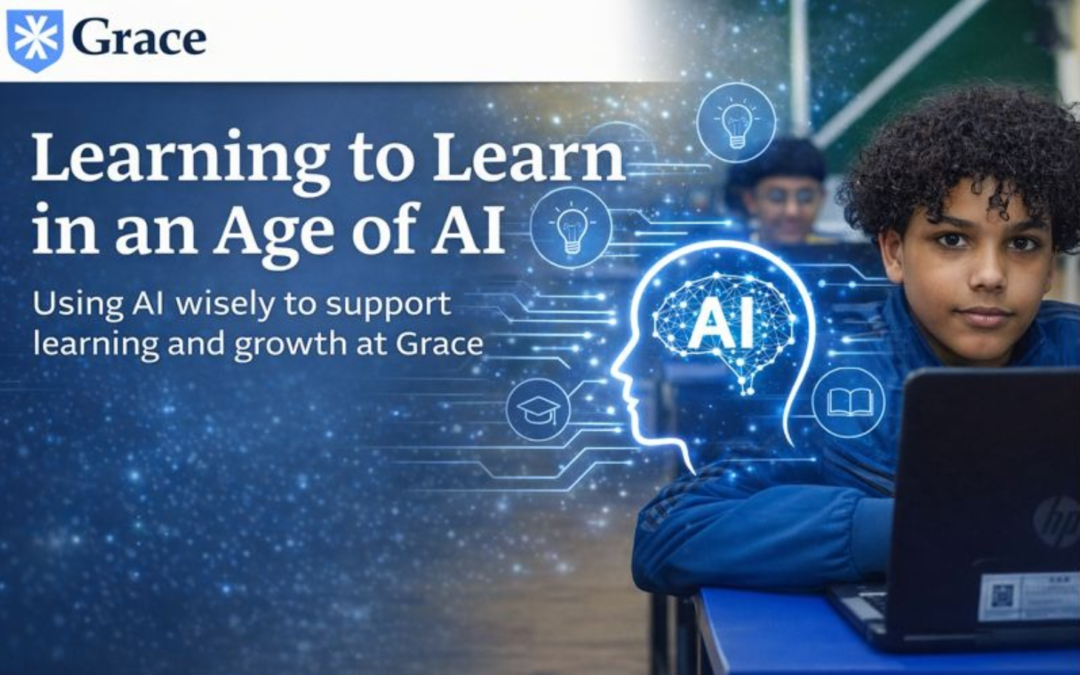
Artificial intelligence is becoming a natural part of the world our students are growing into. From the tools we use at work to the way information is shared and created, AI is no longer something for the future—it is already here. At Grace, we believe it is important to face this reality thoughtfully and with wisdom.
Like all technology, AI is neither good nor bad on its own. It is a tool. What matters most is how it is used and why it is used. Our role as educators is not to fear new tools or to use them without care, but to guide students in learning how to use them wisely, ethically, and purposefully. AI should support learning, not replace it.
In our classrooms, teachers may use AI to help with lesson planning, differentiation, and feedback. These tools can help teachers respond more effectively to the diverse needs of students, offering alternative explanations, extra practice, or new approaches to a topic. When used well, AI can free teachers to focus more on what matters most: relationships, thoughtful discussion, and meaningful learning experiences.
For students, learning to use AI well is part of learning how to learn. We encourage students to see AI as a support for curiosity and thinking, not a shortcut. AI can help students organise ideas, ask better questions, and explore different perspectives. However, it should never replace effort, reflection, or personal responsibility. True learning still involves challenge, perseverance, and growth.
We believe that productive struggle is an important part of education. When students wrestle with ideas, make mistakes, and try again, they develop resilience, discipline, and confidence. These habits cannot be automated. AI may assist the process, but it cannot do the learning for them.
Used thoughtfully, AI can be a powerful tool for creativity, problem-solving, and lifelong learning. At Grace, our aim is to equip students not just to use new technologies, but to use them with integrity and wisdom. We want our students to grow into people who make careful choices, serve others well, and use their skills for good.
Ultimately, technology should help students grow, not replace what makes them human. We believe each child is created with the ability to think, create, and learn. Our task is to nurture those God-given gifts and to teach students how to use every tool—old or new—in ways that honour learning, community, and purpose.